Plumbing
Pipe Repair & Repiping in Union County & Central NJ
Professional pipe repair and whole-house repiping for aging galvanized, polybutylene, or corroded copper systems.
Water supply pipes rarely fail all at once. Galvanized steel closes up with rust from the inside, polybutylene turns brittle, and copper can develop pinholes that keep appearing in new places. Vanguard's licensed plumbers repair the section that failed when the rest of the system is sound, and replace the supply piping throughout the house when it is not. Before recommending either, we trace the lines from the main shutoff to the fixtures and explain what we found in plain terms. Our own technicians do the work, not subcontractors, and our NJ Master Plumber license number is NJMPL 13344.
Common problems and how we handle them
When is a spot repair enough, and when is repiping the better call?
A single leak in pipe that is otherwise in good shape usually calls for a repair: the damaged length is cut out and new pipe is joined in. The case for repiping builds when trouble is spread through the house. Watch for leaks in different rooms one after another, weak flow at several fixtures at once, discolored water first thing in the morning, and clamps or patches left from earlier repairs. When a section comes out, the inside of the old pipe shows how much wall and open bore are left, which is better evidence than the age of the house.
Why do my copper pipes keep getting pinhole leaks?
Most pinholes in copper come from pitting, a form of corrosion that eats through the pipe wall at small points from the inside. Water chemistry plays a part, and so does fast-moving water, which wears the inside of elbows and tees. A blue-green crust or a small mineral bead on the outside of the pipe often marks a spot that is weeping. Because the same water runs through the whole system, one pinhole is often followed by more. Once repeat leaks form a pattern, replacing the affected runs usually makes more sense than patching each new one.
What goes wrong where galvanized pipe meets copper?
When galvanized steel and copper are joined directly, the two metals set up galvanic corrosion, and the steel side of the joint rusts faster than it would on its own. Many older houses were updated piece by piece this way, with copper added in one area and galvanized left in another. A dielectric union or fitting at each transition separates the metals and slows that corrosion. If the remaining galvanized pipe is already narrowed by rust, though, new fittings will not restore its flow, and replacing it is the longer-lasting fix.
How can I tell if my house has polybutylene pipe?
Polybutylene is a flexible plastic supply pipe, usually gray, that went into many homes from the late 1970s to the mid-1990s. Check where the water service line comes through the foundation and at the connections to the water heater. The pipe is often stamped PB2110, and it is joined with plastic fittings or metal crimp rings. Production ended after widespread failures of the pipe and its fittings, and home inspectors routinely flag it when a house is sold. Because failures can happen without warning, replacing it is the lasting answer rather than repairing it section by section.
How the job works
- We trace the visible supply piping from the main shutoff toward each fixture, noting pipe material and size, earlier patches, and each spot where dissimilar metals meet.
- We measure static pressure and check flow at several fixtures to confirm the piping itself is what restricts the water before any pipe is replaced.
- Our recommendation goes to you in writing, spot repair or repipe, with the pipe material, the route the new lines will take, and every wall or ceiling opening needed.
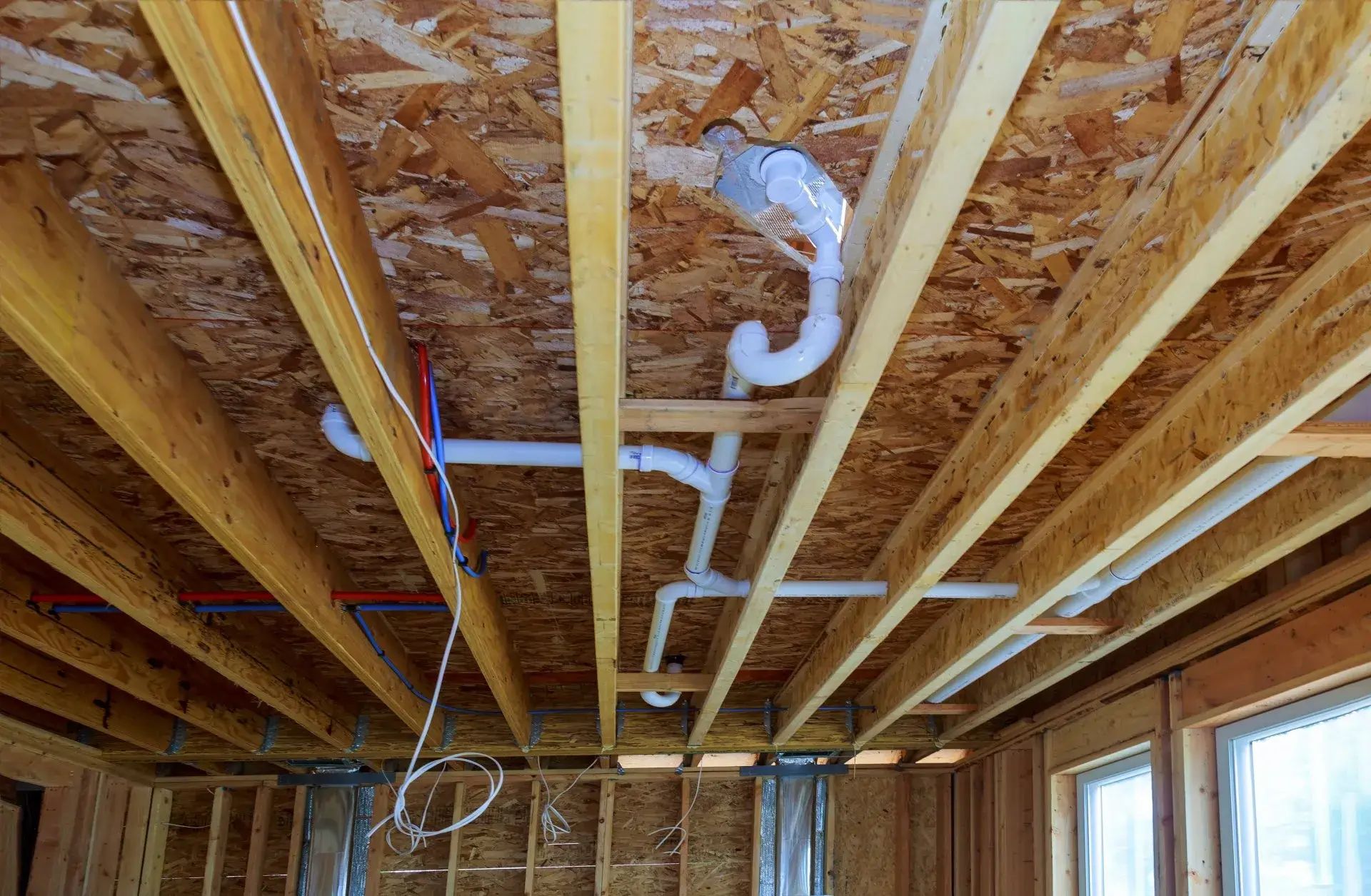
- New lines run through basement ceilings, closets and existing chases where the layout allows, and any fixture without its own shutoff valve can get one at the same time.
- The new piping is pressure-tested and each fixture is run to check flow and joints while the walls are still open, and on jobs that need a permit, we arrange the inspection at that stage too.
Cost of pipe repair & repiping
Two things drive a repiping price more than anything else: how many fixtures and floors the new lines have to reach, and how much finished wall and ceiling must be opened to route them. Your choice of pipe material and any permit and inspection fees also count. A single repair depends mostly on how easy the pipe is to reach. Nothing is cut until you have the price in writing, and larger repiping projects can be financed.
Why homeowners call Vanguard for pipe repair & repiping
- Licensed and insured. We work under NJ Master Plumber license NJMPL 13344 and HVACR license 19HC00609600, and every job is done by our own technicians, never a subcontractor.
- Upfront pricing, free estimates on most jobs. You approve a written price before work begins. No surprise line items when the job is finished.
- 4.9 stars across 556+ Google reviews. Read what customers say.
- Answered 24/7. Our phone is answered around the clock, including holidays.
Related plumbing services
Areas we serve
We provide pipe repair & repiping throughout Union, Middlesex, Somerset, and Essex counties, including:
Pipe Repair & Repiping questions
Is copper or PEX better for repiping?
Both are widely used for household water lines, and each has trade-offs. PEX is flexible, so it can be pulled through walls in long runs with fewer fittings and fewer openings, and it is less likely than rigid pipe to split if it freezes. It has to be kept out of sunlight. Copper is rigid, handles heat well, and has a long track record, though very aggressive water can pit it. We explain which suits your house and why before you choose.
Can we stay in the house during a repipe?
In most cases, yes. The water has to be shut off while old lines are disconnected and the new ones are tied in, so some or all fixtures will be out of service for periods during the job. Before work starts, we go over which rooms will be affected and when, so you can plan showers, laundry and cooking around it.
Will repiping fix low water pressure?
Only if the pipes are the cause. Galvanized lines choked with rust are a frequent reason for weak flow, and replacing them brings it back. Low pressure can also come from a failing pressure-reducing valve, a main shutoff that is partly closed or corroded inside, or clogged aerators and cartridges. We test before recommending a repipe, because new pipe will not cure a bad valve.
Does a whole-house repipe include the water line from the street?
Usually not. A repipe covers the supply lines inside the house. The underground service line that carries water in from the street is a separate job. Where that line comes through the foundation, its material is visible, and we will tell you if it looks like galvanized steel or lead so you can decide what to do next.
Ready to Get It Fixed?
Call or email us. We'll get back to you fast.