It's the first genuinely hot week of June. You flip on the AC for the first time since last September, set it to 72, and wait. Twenty minutes later the house is still 79 degrees and the air coming out of the vents feels like it's been sitting in a car. That's when you realize you probably should have done something before summer arrived, not during it.
This happens to a lot of Union County homeowners every year. Not because they don't care about their AC, but because central air conditioning is the kind of system that quietly gets worse over a long winter and doesn't announce the problem until you need it most. By July, HVAC technicians across New Jersey are swamped with emergency calls that could have been handled as a routine spring tune-up in April.
If you're in Scotch Plains, Westfield, Cranford, or anywhere nearby, this guide covers exactly what annual AC maintenance should include, which tasks you can handle yourself, and which ones genuinely need a licensed technician. The goal is a system that runs efficiently all summer without surprising you with a breakdown or a sky-high electric bill.
What Can Homeowners Do Themselves?
The most impactful thing you can do right now, without any tools or training, is check your air filter. A clogged filter is behind more AC underperformance calls than most homeowners realize. It forces the blower motor to work harder, restricts airflow across the evaporator coil, drives up energy costs, and accelerates wear on components that are expensive to replace.
In New Jersey homes where the AC runs hard from June through September, checking the filter monthly is the smarter move. A lot of homeowners follow the "every three months" rule on the packaging, but that assumes moderate use in a dry climate. Union County summers are neither moderate nor dry.
Here are three things you can do today without calling anyone:
- Pull the air filter and hold it up to light. If you can't see through it, replace it now. A new filter costs a few dollars and takes two minutes to swap out.
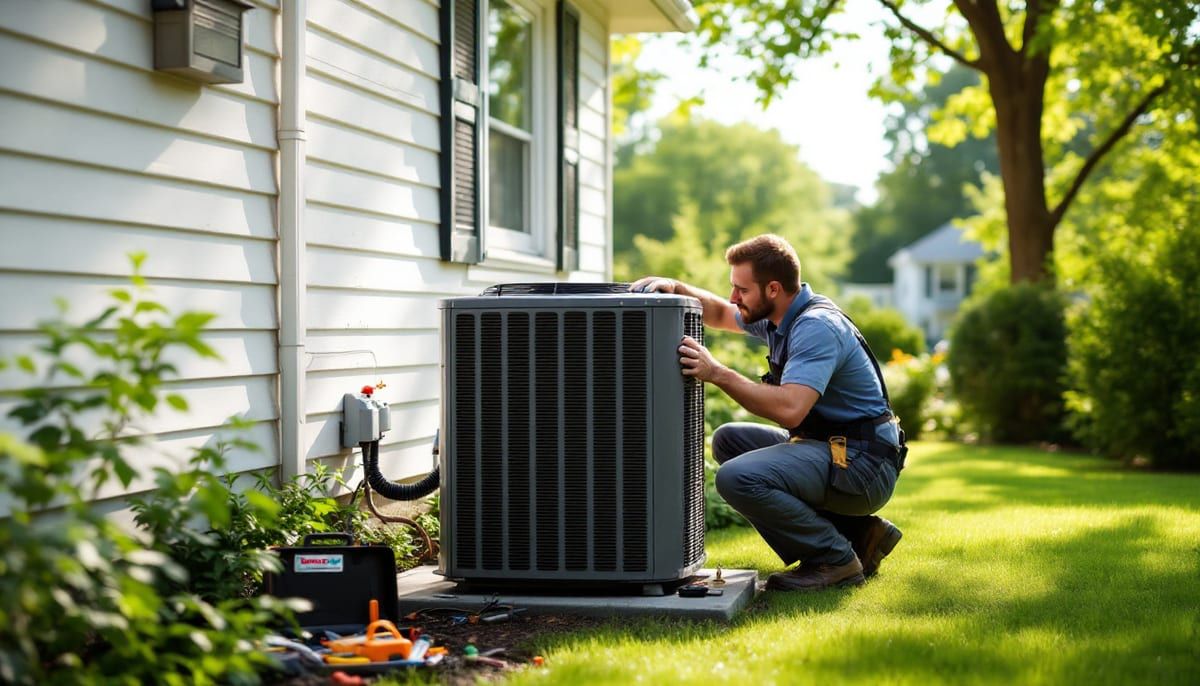
- Walk outside and look at your condenser unit. You need at least two feet of clear space on all sides. Trim back anything that's grown in close. Clear out grass clippings, leaves, or debris sitting against the unit. This isn't cosmetic. Restricted airflow around the condenser causes the system to overheat and short-cycle.
- Check your thermostat settings. Make sure it's set to "cool" and "auto," not "fan only." If you have a basic thermostat that hasn't been replaced in years, it may be reading temperatures inaccurately. A programmable or smart thermostat lets you set schedules that cut runtime during work hours without sacrificing comfort when you're home.
Those three steps cost nothing but a few minutes. They won't substitute for professional service, but they can meaningfully affect how your system performs going into summer.
Why Do Dirty Coils Matter So Much?
Your AC's evaporator and condenser coils are where the actual heat transfer happens, and when they're coated in dust, grime, or debris, the whole system has to work longer and harder to do the same job. That means higher electric bills, more wear on the compressor, and a shorter overall lifespan for the unit.
Evaporator coils are inside your air handler. Condenser coils are in the outdoor unit. Both accumulate buildup over a cooling season, and after a winter of sitting unused, the outdoor coil in particular picks up a lot of debris. Dirty coils are one of the most common reasons a system runs constantly without ever hitting the target temperature.
This is not a DIY task. The fins on the coils are thin and bend easily. The cleaning chemicals that actually work can damage refrigerant lines if misapplied. A licensed HVAC technician has the right tools and knows how to clean coils thoroughly without causing more problems than they solve. One professional cleaning per year, done before the cooling season starts, keeps efficiency where it should be and prevents the kind of compressor strain that leads to major repairs.
If your electric bill has climbed over the past couple of summers without an obvious reason, dirty coils are worth investigating before you assume the system needs replacing. Professional AC maintenance often resolves efficiency issues that look like equipment failure.
What's the Deal With Refrigerant?
Low refrigerant is one of the most common causes of poor cooling in New Jersey homes, and it's also one of the most misunderstood. Refrigerant doesn't get used up over time the way gasoline does. If the level is low, that means there's a leak somewhere in the system.
Only an EPA-certified technician can legally check refrigerant levels, handle the refrigerant itself, or repair the leak. This isn't a loophole or a technicality. Refrigerant handling requires specialized equipment and certification, and attempting to top off a system without finding and fixing the leak first just delays the problem.
The signs of low refrigerant are worth knowing:
- Warm air from the vents even when the system is running
- Ice buildup on the refrigerant line running between the outdoor unit and the air handler
- The system running constantly without reaching the set temperature
- Hissing or bubbling sounds near the refrigerant lines
If you're seeing any of those, don't wait. A refrigerant leak that's caught early is a repair. A refrigerant leak that's ignored until the compressor fails is a much bigger problem. Call a licensed technician and get it checked before the peak of summer.
Why Do Electrical Checks Belong in Every Annual Tune-Up?
Electrical failures are one of the leading causes of AC breakdowns in mid-summer, and most of them give almost no warning before they take the system down. Capacitors are the most common culprit. They're responsible for starting and running the compressor and fan motors, and when one fails, the motor it supports stops working.
A failing capacitor sometimes causes the system to struggle to start, make a humming sound, or take longer than usual to kick on. But just as often it goes without any noticeable symptoms until the unit simply stops running on the hottest afternoon of August.
A licensed HVAC technician will check capacitors, contactors and wiring connections as part of a standard spring tune-up. This is exactly the kind of thing that costs very little to address during scheduled maintenance and a lot more when it causes an emergency call in the middle of a heat wave. If you're in the Scotch Plains area and haven't had your system inspected this year, scheduling that appointment now puts you ahead of the summer rush.
Contactors are worth mentioning separately. They're the electrical switch that allows power to reach the compressor and fan motor. Pitted or burned contacts reduce efficiency and eventually cause the system to fail to start. Neither capacitors nor contactors are parts homeowners should be poking around with. Leave those to a licensed tech.
What Does NJ Humidity Do to an AC System?
Union County's summer humidity doesn't just make the heat feel worse. It genuinely puts more strain on your AC system than the same temperatures would in a drier climate. Central air conditioning removes both heat and moisture from the air. In a place like Scotch Plains where July humidity regularly pushes into the 70 to 80 percent range, the system is working harder than the thermostat alone suggests.
That added workload affects a few specific components. The compressor works longer under high-humidity conditions. The condensate drain system, which removes moisture pulled from the air, handles a much heavier load. A clogged condensate drain line is a warm-weather problem that shows up often in NJ homes. When the drain backs up, water overflows from the drip pan, which can cause water damage to ceilings, walls and floors depending on where the air handler is located.
Annual maintenance should include clearing the condensate drain line. It's a simple step but one that gets skipped when homeowners try to handle everything themselves and don't know to look for it. A licensed technician will check drain line flow, clear any blockage and verify that the float switch (which shuts the system off if the pan fills up) is functioning correctly.
If your home feels damp and uncomfortable even when the AC is running, the system may not be removing humidity effectively. That can be a sign of an oversized unit, a refrigerant issue or a coil problem. Any of those are worth having a technician look at rather than just turning the thermostat down further. For homeowners across Union County, our local service coverage makes it straightforward to get that diagnosis scheduled.
What Does a Full Annual AC Tune-Up Include?
A professional AC tune-up before the cooling season isn't just a filter swap and a look at the outdoor unit. Here's what a thorough inspection from a licensed technician should cover:
- Air filter check and replacement: Confirm the filter is clean and properly seated. If you haven't replaced it recently, this is the time.
- Thermostat calibration: Verify the thermostat is reading temperatures accurately and cycling the system correctly. Discuss scheduling options if you're still on a manual thermostat.
- Electrical component inspection: Test capacitors, contactors and wiring connections. Replace anything showing signs of wear before failure occurs mid-season.
- Coil cleaning: Clean both the evaporator and condenser coils using appropriate tools and solutions. Straighten bent fins where needed.
- Refrigerant level check: Measure refrigerant charge. If levels are low, locate and repair the leak before adding refrigerant.
- Condensate drain inspection: Clear the drain line, check the drip pan for standing water and confirm the float switch is operational.
- Outdoor unit clearance check: Confirm adequate clearance around the condenser, clear debris from the fins and verify the unit is level on its pad.
- Airflow assessment: Check that airflow through the supply and return vents is consistent across the system. Flag any rooms that are significantly warmer than the rest of the house.
Most of this takes one to two hours for a single-zone central system. It's a straightforward appointment that most homeowners in the Scotch Plains area schedule in March or April, before demand picks up and availability tightens. Our HVAC service team handles full tune-ups as well as specific repairs when something comes up during the inspection.
Why Choose Vanguard Service NJ?
Vanguard Service NJ is a licensed plumbing and HVAC company based in Scotch Plains, serving homeowners across Union County and the surrounding New Jersey communities. We work on central air systems in the kinds of homes that exist here: older split-levels, newer construction, townhomes, homes with original ductwork and homes that have been updated over the years. We know the equipment that's common in this area and the issues that come up in a New Jersey summer.
When we come out for an AC tune-up, we're not running through a checklist to sell you something. We're checking the system the way we'd check one in our own house and telling you what we find. If something needs attention, we say so and explain why. If everything is in good shape, we tell you that too.
You can read what other Union County homeowners have said on our reviews page or check out available seasonal specials before scheduling. We also offer financing options for homeowners who need to address larger repairs or equipment replacement.
The Bottom Line
Here's what matters: Annual AC maintenance in New Jersey isn't optional if you want a system that performs reliably through a hot, humid summer. Dirty coils, low refrigerant, failing capacitors and clogged drain lines are the reasons systems break down in July. A spring tune-up by a licensed HVAC technician catches those problems before the temperature does. Filter changes and condenser clearance you can handle yourself. Everything else is worth scheduling before peak season hits.
Need AC maintenance or HVAC help in Union County? Call Vanguard Service NJ at 908-577-5579 or request service online.