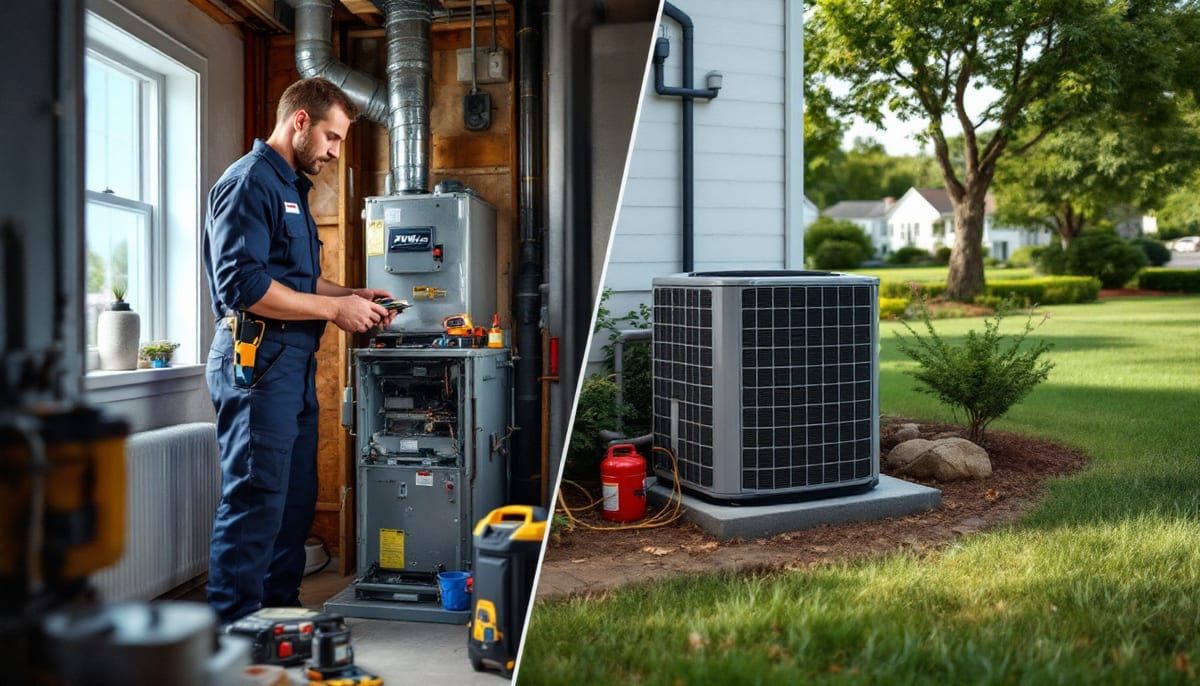
It's 11 PM on a Tuesday in late November. The temperature outside drops into the mid-20s, and you flip on the heat for the first time since spring. Nothing happens. You check the thermostat, reset the circuit breaker, wait ten minutes. Still nothing. Now you've got a house full of people, the temperature is already dropping inside, and you have no idea whether anyone will even answer the phone at this hour. This is exactly the kind of situation homeowners across Scotch Plains and Union County call us about, and it happens more than most people expect. HVAC emergencies don't schedule themselves around business hours or convenient weather. They hit when systems are pushed hard after months of sitting idle, when extreme heat or cold arrives without warning, and when you have no time to research your options. Knowing what to expect before you're in that situation makes a real difference.
When Do HVAC Emergencies Actually Happen?
The highest-risk moments for HVAC failure are seasonal transitions, not the middle of winter or summer. Furnaces and boilers that sat unused since March are most likely to fail when they're first pushed hard in late November or December. Air conditioners that struggled through last summer often break down during the first real heat wave in late May or June.
Here's why: components that have been dormant for months are more vulnerable than ones running daily. Ignition systems corrode. Capacitors weaken. Refrigerant leaks that were borderline in September become full system failures when the unit kicks on for the first heat wave. By then, every HVAC company in Union County is fielding calls at the same time.
The frustrating part is that most of these failures are preventable. But when prevention doesn't happen, knowing who to call and what to expect becomes the priority.
A few things you can do right now, before any emergency hits:
- Check your air filter: A clogged filter is one of the most common reasons systems underperform or trip safety shutoffs. Check it before the season starts. Replace it if it's been more than 60-90 days.
- Test your thermostat: Flip your system to heat mode in September, not November. If it doesn't respond within five minutes, you've found a problem before the cold arrives.
- Clear the area around your outdoor unit: Overgrown shrubs and debris restrict airflow and cause the system to work harder than it needs to. A five-minute check now can prevent a real problem later.
What Does Emergency HVAC Service Actually Cost in NJ?
Emergency HVAC repairs in New Jersey typically cost more than a standard weekday appointment, and that's legitimate. The premium reflects after-hours labor rates, priority dispatch, and the cost of sourcing parts quickly outside of normal supply chain hours. Any company telling you their emergency rate is identical to their standard rate is either building the markup into the base price or cutting corners somewhere else.
For current price ranges, see our AC and furnace repair cost guide.
What's not legitimate is hidden fees layered on top of a quoted price after the work is done. That's the part homeowners in stressful situations need to watch for. You're already anxious. It's late. You want the heat back on. That's exactly when certain companies add charges that weren't discussed upfront.
Vanguard Service NJ provides written pricing before any work begins, including on emergency calls. The quoted price is the price. No surprises on the invoice after the technician packs up.
A few practical steps when you're facing an emergency repair and worried about costs:
- Ask for written pricing before the work starts: Any reputable company will do this. If a technician starts working before you've seen a price, that's a problem.
- Ask whether the diagnosis fee applies to the repair cost: Some companies charge a separate diagnostic fee and a separate repair fee. Others roll the diagnostic into the repair total. Know which structure you're dealing with before agreeing to anything.
- Check your homeowner's insurance policy: Some policies cover emergency HVAC repairs related to sudden mechanical failure. It's worth a five-minute call to your insurance agent while the technician is diagnosing the issue.
What Should a Legitimate Emergency HVAC Call Look Like?
A real emergency HVAC call starts with a real person answering the phone, not a voicemail or an online form. If you're calling at midnight and no one picks up, you're not getting emergency service. You're getting a callback sometime the next morning, which isn't much help when your house is 45 degrees.
After the call, you should receive a clear arrival window. Not "sometime tonight." An actual window. The technician should arrive with a fully stocked truck. The most common heating and cooling failures across homes in Scotch Plains and Union County involve ignitors, capacitors, motors, pressure switches and similar components that a prepared truck carries as a matter of course. If a technician needs to come back the next day for parts on a routine failure, that's a stocking and preparation issue.
Once the repair is done, a professional technician walks you through what failed, shows you what was replaced, confirms the system is running correctly across multiple cycles, and leaves the work area clean. You should never feel like you were just told something happened and handed an invoice without explanation.
Vanguard Service NJ technicians are licensed under New Jersey requirements and arrive equipped to handle the most common failures without a return trip. After the repair, the homeowner gets a clear explanation of what was wrong, what was done, and what to watch for going forward. That's how it should work on every call, not just when it's convenient.
Do HVAC Repairs in NJ Require Permits?
Significant HVAC repairs and all equipment installations in Scotch Plains and across Union County typically require permits under New Jersey state code. This isn't just paperwork. It's the mechanism that ensures the work is done correctly, inspected by a third party, and documented as part of your home's history.
Skipping permits creates real problems. Most homeowner's insurance policies require work to meet local code. If a non-permitted installation contributes to a fire, flood, or property damage, the insurer has grounds to deny the claim. When you sell the house, a buyer's home inspector or attorney will identify unpermitted HVAC work during due diligence, and that becomes a negotiating issue at the worst possible time.
Vanguard Service NJ pulls the required permits, coordinates the inspection, and meets the inspector on-site. The homeowner doesn't have to manage any of that paperwork or rearrange their schedule for an inspection. It's handled.
If you've had HVAC work done in the past and aren't sure whether permits were pulled, you can check with your local building department. In Scotch Plains, that's the Building Department through the Township. It's a quick lookup by address, and it's worth knowing before any future sale or insurance claim comes up.
Can Pre-Season Maintenance Actually Prevent Emergencies?
Yes, and the gap between homeowners who schedule pre-season maintenance and those who don't is significant in terms of emergency call frequency. A fall tune-up for heating systems and a spring tune-up for cooling catches most issues during a controlled, scheduled visit rather than at 11 PM when the system fails.
During a proper maintenance visit, a technician checks components under actual load conditions. That's the key difference between a maintenance call and a visual inspection. Running the system hard and monitoring how it performs reveals failing capacitors, weak ignition systems, refrigerant levels that are borderline, and airflow restrictions that would otherwise only show up as a breakdown on the coldest night of the year.
Homeowners who schedule pre-season maintenance with Vanguard Service NJ consistently see fewer emergency service calls throughout the season. The math is straightforward: a planned maintenance visit costs less than an emergency repair, causes zero disruption to your household, and gives you time to make decisions about parts or equipment without pressure.
If you're in Scotch Plains, Westfield, Fanwood, Mountainside or elsewhere in Union County, a spring HVAC checkup before the first heat wave and a fall checkup before Thanksgiving are the two most effective things you can do to reduce emergency risk. Learn more about our HVAC services in New Jersey or check our current maintenance specials.
How Vanguard Service NJ Handles Emergency Calls
When a homeowner calls Vanguard Service NJ with an HVAC emergency, the process is straightforward. A real person answers the phone, 24/7 including holidays. Pricing is provided in writing before any work starts. The repair gets done with the parts on the truck whenever possible. And the homeowner gets a full explanation before we leave.
Our team serves Scotch Plains and the surrounding Union County communities, including Westfield, Fanwood, Mountainside, Clark and Cranford. If you're outside those areas, visit our service area page to check coverage.
For homeowners dealing with boiler issues specifically, our boiler repair and service page covers what to expect with heating system failures in older New Jersey homes. For cooling problems, our HVAC service page outlines the full scope of what we handle. And if you need to get on the schedule now, the fastest way is to request service online or call us directly.
Why Choose Vanguard Service NJ?
There's no shortage of HVAC companies in Union County. What separates a good experience from a frustrating one usually comes down to a few basics: does someone answer the phone, do they show up when they say they will, and is the price what was quoted?
Vanguard Service NJ is a licensed New Jersey plumbing and HVAC company based in Scotch Plains. We work on heating and cooling systems across Union County and nearby communities. We know the housing stock here, the common failure points in older homes, and the code requirements that apply to this area. We don't subcontract emergency calls to whoever is available that night. The technician who shows up is part of our team.
We give homeowners straight answers before any work begins, including honest assessments of whether a repair makes sense on an aging system or whether replacement is the better call. Our customer reviews reflect what that experience actually looks like. If you want to explore financing options for larger equipment replacements, we offer those too through our financing page.
The Bottom Line
Here's what matters: HVAC emergencies in Scotch Plains and Union County most often hit at seasonal transitions, not the middle of peak season. A legitimate emergency service call includes a real person answering, a clear arrival window, written pricing before work begins, and a licensed technician with the parts to fix the problem on the first visit. Pre-season maintenance is the most reliable way to avoid that midnight call in the first place.
Need plumbing or HVAC help in New Jersey? Call Vanguard Service NJ at 908-577-5579 or request service online.